
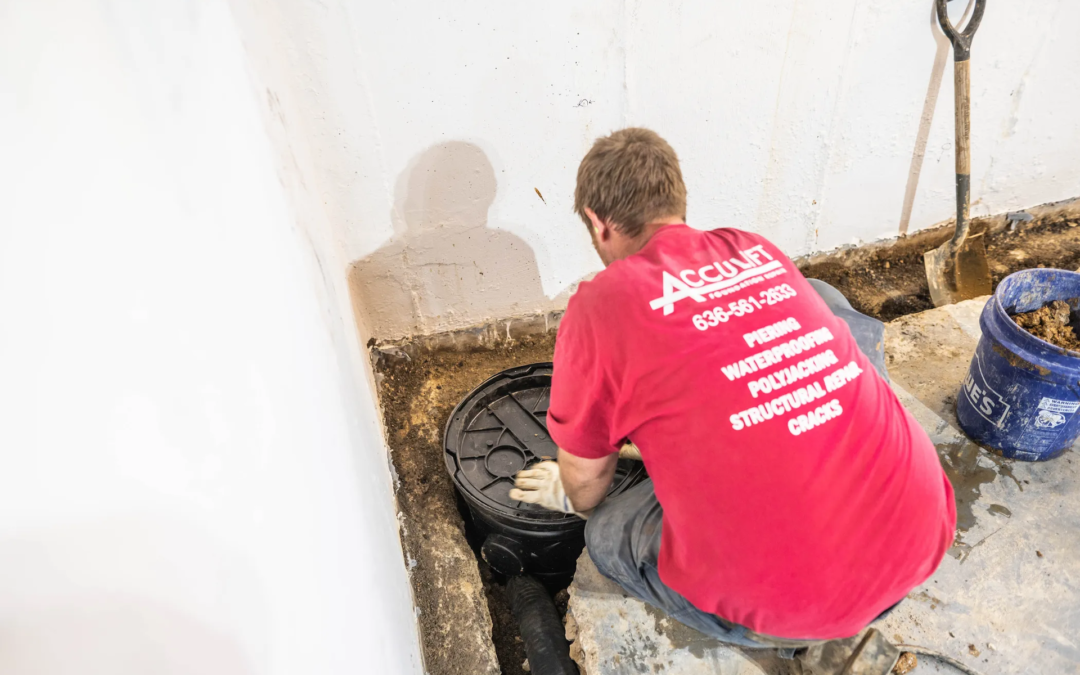
No homeowner wants to discover water collecting in their basement. Fortunately, a sump pump can serve as your basement’s first line of defense against flooding.
A sump pump is a device installed in the lowest part of a basement to collect and remove excess water. This is particularly beneficial for flood-prone basements, homes with high water tables, and areas that experience heavy rainfall.
Let’s take a closer look at how a sump pump works, how it can help protect your home, and the different types available.
How Does a Sump Pump Work?
Sump pumps are designed to respond automatically. Here’s how they work, step by step.
- Groundwater collects in a perforated perimeter pipe that circles the house where the basement wall meets the basement floor. The pipe slopes toward a sump pit, a pit in the lowest part of the basement.
- Inside the pit is the sump pump, which is equipped with a float switch that detects the water level in the sump pit. When the float switch reaches a set height, the sump pump turns on.
- The pump pushes the water up through a discharge pipe, far enough away from the foundation to prevent it from flowing back.
- When the water level drops below the set height, the float switch deactivates the pump.
Reasons to Have a Sump Pump
Homes without sump pumps may be at a greater risk of damage. This is especially true in older homes or unfinished basements where waterproofing may not be up to date.
Water accumulation in your basement can quickly damage drywall, insulation, furniture, and appliances, leading to costly repairs. It also causes mold growth on walls and floors, which can affect indoor air quality and pose health risks.
Different Types of Sump Pumps
There are two main types of sump pumps available for residential basements: pedestal and submersible. Both remove excess water, but they differ in their design and cost.
Pedestal Sump Pumps
A pedestal sump pump has a pump that sits at the bottom of the sump pit, and its motor rises above the pit on a vertical stand called a pedestal. With the motor exposed, pedestal pumps are more noticeable and tend to be louder. Yet they generally cost less and have a longer lifespan.
Submersible Sump Pumps
Designed to operate entirely underwater, a submersible sump pump has both its pump and motor positioned inside the sump pit, keeping them out of sight. Submersible sump pumps generally cost more than pedestal models, but they tend to operate more quietly.
Do Sump Pumps Work When the Power Goes Out?
Most primary sump pumps rely on your home’s electrical system, so they won’t work during a power outage. This can be especially concerning during heavy storms.
That’s where a battery backup system comes in. If the power goes out, the backup pump will activate as needed to remove water from the sump pit. It also works if the circuit breaker trips or the primary pump can’t keep up with rising water levels.
Keep Your Basement Dry With Acculift Foundation Repair
Water intrusion can cause serious problems for your home, but you don’t have to handle it alone. Whether you’re dealing with recurring basement flooding or want to prevent future issues, Acculift Foundation Repair is here to help.
Our team provides sump pump installation and maintenance services to help keep your system working when you need it most. We’ll thoroughly inspect, clean, and test your sump pump, backup system, and discharge lines to identify potential issues before they become serious problems, giving you peace of mind.
To learn more about our services and schedule a free evaluation, contact us today!