
Finding a crack in your home’s foundation can be unsettling. Some foundation cracks are relatively minor, while others are signs of foundation movement or water intrusion, but neither should be ignored. Here is how to differentiate between structural and nonstructural cracks and determine whether your home needs simple maintenance or urgent repair.
What Are Structural Cracks?
Structural cracks develop when underlying problems affect the strength and stability of the home’s foundation. They can result from several factors, including uneven settlement, expansive or shifting soil, and excessive water pressure.
Address these promptly, as they could compromise your safety. Without proper repairs, the damage may become more extensive and costly to fix.
Knowing how to tell if cracks are structural can help you recognize potential foundation problems. Common warning signs include:
- Cracks that measure ⅛ inch or wider
- Diagonal or stair-step cracks, particularly in block or brick walls
- Cracks that run along the ceiling and down the wall
- Several vertical cracks next to each other
- Associated signs like jammed doors or sloping floors
What Are Nonstructural Cracks?
Nonstructural cracks don’t threaten a building’s structural integrity. They typically develop as concrete shrinks during curing, or expands and contracts with temperature changes. However, that doesn’t mean they’re harmless. Even nonstructural cracks can allow water to enter a basement.
To help determine if cracks are nonstructural, look for the following characteristics:
- Singular hairline cracks less than ⅛ inch in size
- Isolated vertical cracks in foundation walls
- A single, hairline crack in just one cinder block, which usually results from damage during construction or transportation
While not structurally harmful, nonstructural cracks can still allow moisture to enter, potentially leading to mold, mildew, or unsightly stains over time. Sealing them early helps prevent more extensive cosmetic or moisture-related problems.
How Are Foundation Cracks Repaired?
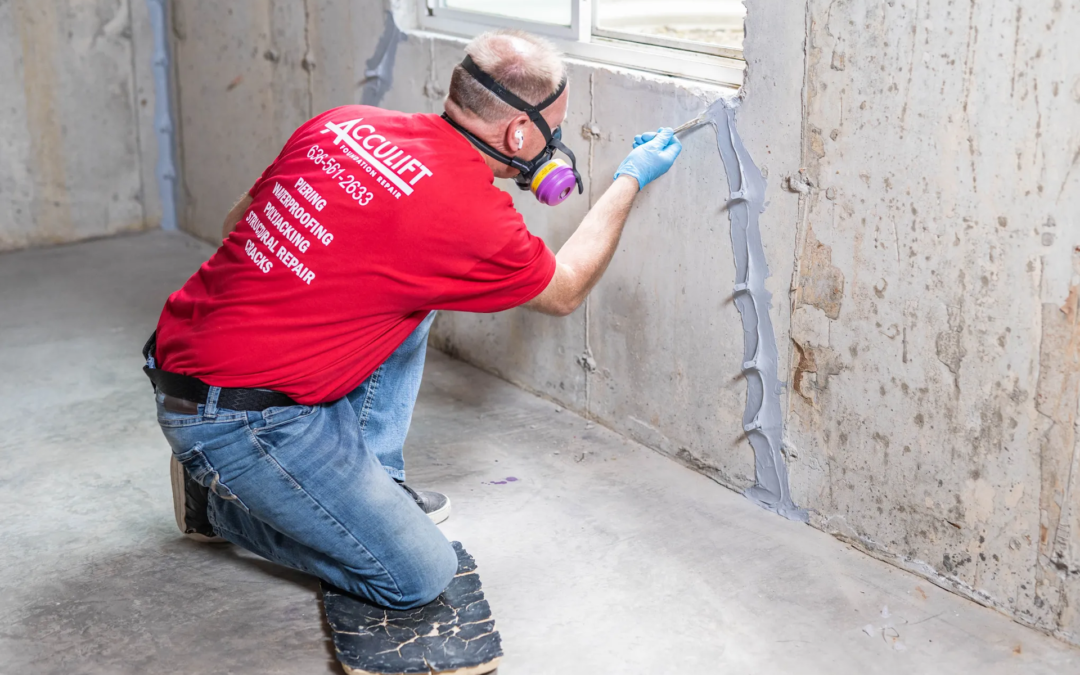
Not all foundation cracks require the same approach to repairs. Depending on the extent of the damage and its underlying cause, foundation repair experts can use one or more techniques.
It’s important to note that, while crack repair is effective at preventing water intrusion, it may not address the underlying cause of the damage. Structural cracks, in particular, may require additional repairs to prevent cracks from reopening or new cracks from forming.
Epoxy Injections
Epoxy is injected into foundation cracks to bond the concrete together and help restore its structural strength. Once cured, it forms a strong, rigid bond that reinforces the damaged area. Different epoxy products are available with varying viscosities.
Polyurethane Injections
As polyurethane cures, it expands within foundation cracks and forms a watertight seal. Unlike epoxy, it can be injected into damp or actively leaking cracks, making it particularly effective for preventing water intrusion. The material remains flexible after curing and can accommodate minor foundation movement.
Carbon Fiber Crack Repair
A lesser-known crack repair method uses carbon fiber to provide a strong seal overtop the crack. Carbon fiber is a relatively newer method, and Acculift Foundation Repair has used it successfully for approximately two decades. It’s especially useful for cracks that need patching beforehand due to spalling or extreme width, very thin cracks that are difficult to repair with injections, and areas that have many overlapping cracks.
Exterior Waterproofing Membranes
Exterior waterproofing involves excavating the soil around the foundation to access cracks from the outside. A liquid waterproofing membrane is then applied to the exterior wall to seal the affected area and prevent water intrusion. The excavated area is then backfilled to replace the soil and restore grade.
Have Your Foundation Professionally Repaired
Foundation cracks shouldn’t be ignored, regardless of their size or severity. Our professional team at Acculift Foundation Repair can evaluate structural and nonstructural cracks, determine what’s causing them, and recommend repairs tailored to your home’s needs.
Throughout St. Louis, Missouri, we provide foundation crack repair and basement waterproofing solutions to homeowners. If you’ve noticed cracks, wall movement, or other signs of foundation damage, contact us to schedule a free evaluation!