
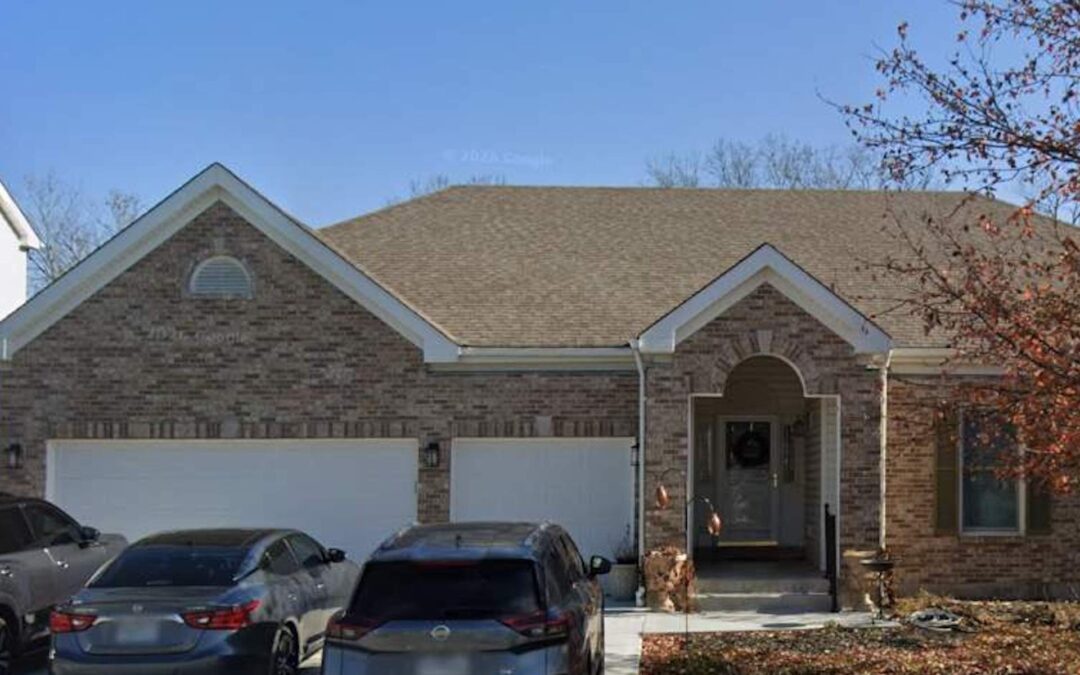
When O’Fallon, Missouri, homeowner Mike Ellis began noticing cracked drywall in his atrium stairwell and diagonal cracks in his basement foundation wall, he knew who to call. Mike had worked with Acculift Foundation Repair in 2022 after a friend referred him, so he turned to the team again to determine what was causing the new concerns.
After evaluating the home, Acculift identified the source of the problems and performed the necessary repairs. This case study takes a closer look at the issues found, the solutions provided, and the results for Mike’s home.
Identifying the Problems
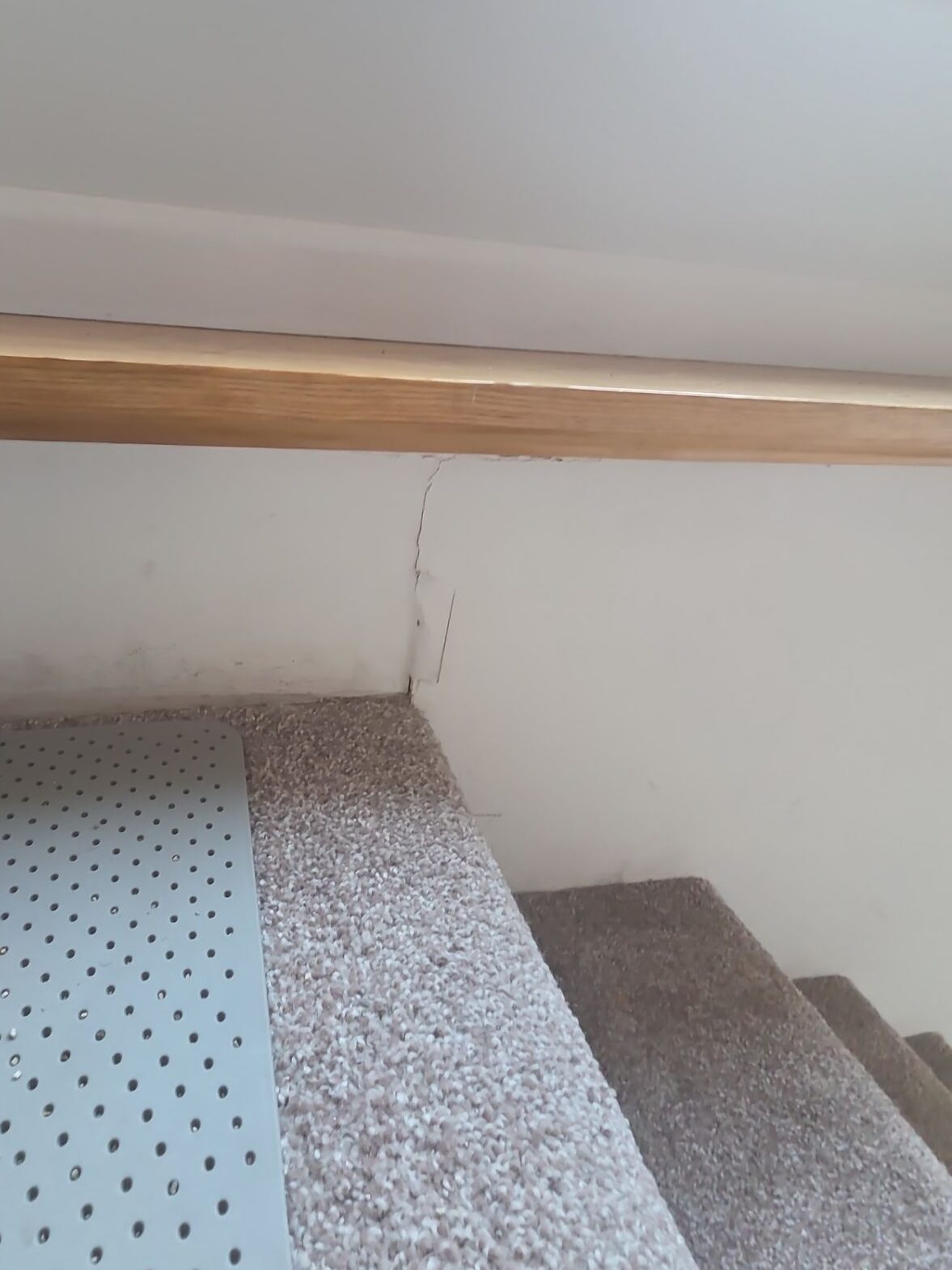
Mike called Acculift in August 2025 after noticing cracked drywall in the atrium stairwell along the rear wall of the house and diagonal cracks in the corners of the basement foundation wall.
Upon inspection, the rear wall showed evidence of lateral movement, which occurs when pressure from the surrounding soil pushes a wall inward. After measuring the wall for deflection, we confirmed that it had pushed inward by 1.25 inches. This movement had damaged the interior drywall and even the framing in the staircase.
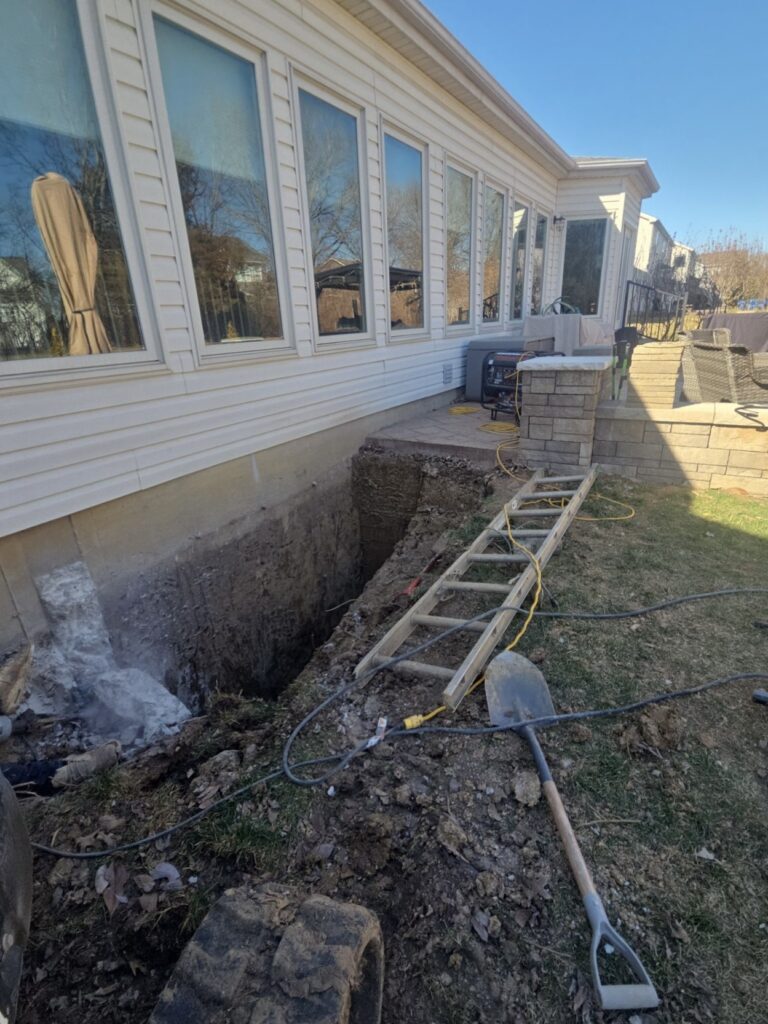
Accessing the rear wall from the exterior also presented a challenge, as the homeowners had recently installed a beautiful, large concrete and stone patio.
Providing Solutions and Results
To return the wall to its original position and stabilize it against further movement, Acculift developed a repair plan with three different techniques.
Sump Pump and Drain Pipe
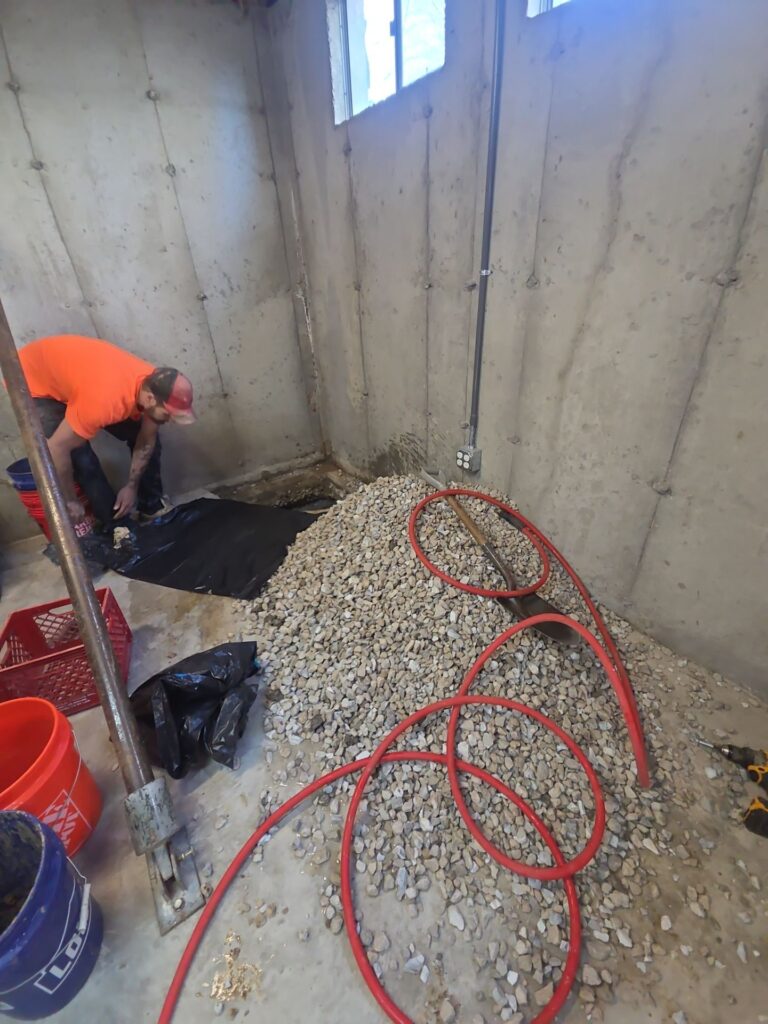
First, we excavated the accessible section of the wall down to the footing. We installed a sump pump and drain pipe to collect and redirect water away from the foundation. To relieve pressure from expansive soils, we lined the 3-foot-deep trench with filter fabric and backfilled it with a clean rock buffer.
As an additional preventative measure, the homeowner requested that we extend the gutter downspout drain pipe 30 feet to direct water farther away from the foundation.
Steel Brackets and Carbon Fiber Straps
Next, we installed steel brackets along the joists and carbon fiber straps to the interior of the wall. The steel brackets prevent the top of the wall from tipping inward, while the carbon fiber straps reinforce the wall against further movement.
Together, these systems use the weight of the house to lock the foundation wall in place and provide long-term stabilization.
Wall Anchors
The stairwell required a different approach because the stairs run perpendicular to the joists, making the space unsuitable for steel brackets and carbon fiber straps. To stabilize this section of the wall, we installed wall anchors.
This method uses wall plates on the interior side of the wall and earth anchors in the ground outside, 15 feet away from the home. Steel rods connect them, creating an anchor that resists the inward force of the soil.
Bring Stability Back to Your Home
The right repair starts with understanding what’s causing the damage and determining the best way to correct it. At Acculift Foundation Repair, we’ll take the time to evaluate the conditions affecting your home and develop a tailored repair plan.
Whether the project calls for one repair method or a combination of techniques, our experienced team has the knowledge and tools to restore stability. If you’ve noticed cracks, wall movement, or other signs of foundation damage, contact us to schedule a free evaluation.