
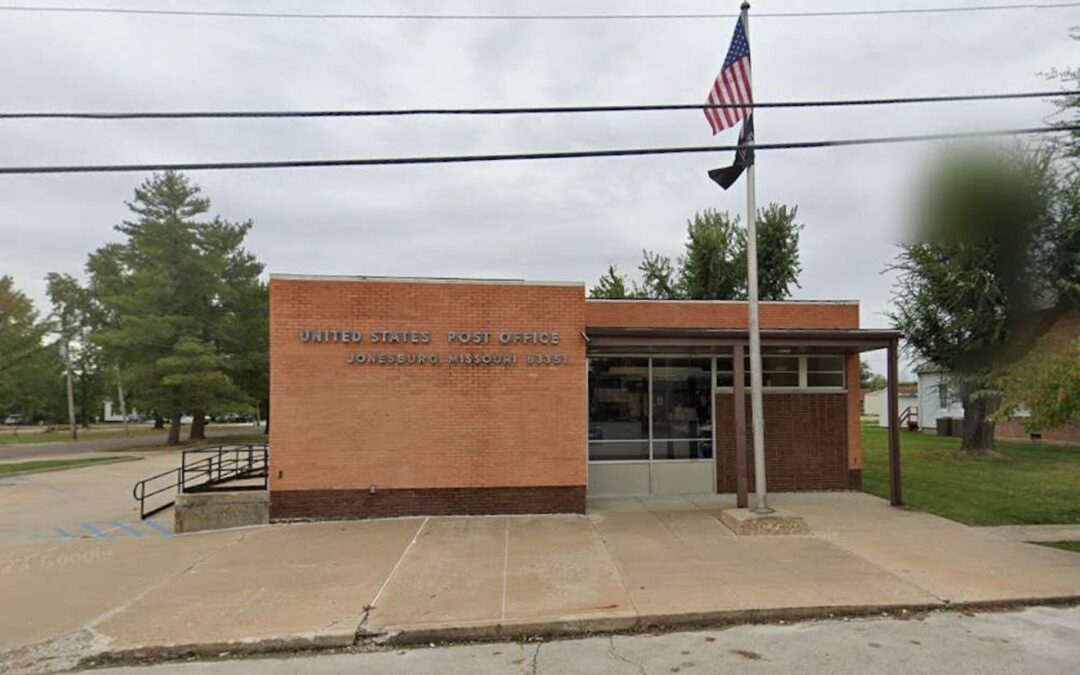
When the owner of a commercial building leased by the United States Postal Service (USPS) began noticing significant settlement issues, he turned to a company he had trusted for more than 15 years: Acculift Foundation Repair. His property, located in downtown Jonesburg, Missouri, was experiencing cracking, wall separation, and floor settlement, which threatened the structure’s long-term stability.
After a thorough evaluation, Acculift determined the source of the settlement and performed repairs to stabilize the building. This case study highlights the challenges encountered, repair methods used, and results achieved.
Evaluating the Property
In July 2025, Keith Meyer, who retired from Meyer Real Estate and owns the building leased by the USPS, contacted Acculift to evaluate worsening structural issues at the property.
Moderate-to-severe symptoms were present throughout the building. The foundation is a poured-in-place concrete spread footing with CMU (concrete masonry unit) walls, commonly referred to as cinder block walls, in lieu of stud walls. Interior dividing walls are also constructed of CMU, and exterior walls are finished with brick veneer.
Identifying the Problems
The evaluation revealed several structural concerns throughout the building, including:
- Moderate step cracking in the CMU exterior walls and interior dividing walls
- Moderate and severe separation of the CMU walls at the corners, with some gaps reaching 1 inch
- Settlement affecting the left and rear wall foundations
- A sinking bathroom floor
Accurately measuring the building’s elevation was challenging due to the dropped ceiling. Measuring from the floor was also unreliable, as the floor itself was settling due to a loss of soil bearing beneath it. As a result, the assessment relied on visible symptoms and input from USPS employees who had observed changes over the last couple of years.
Discovering More Problems
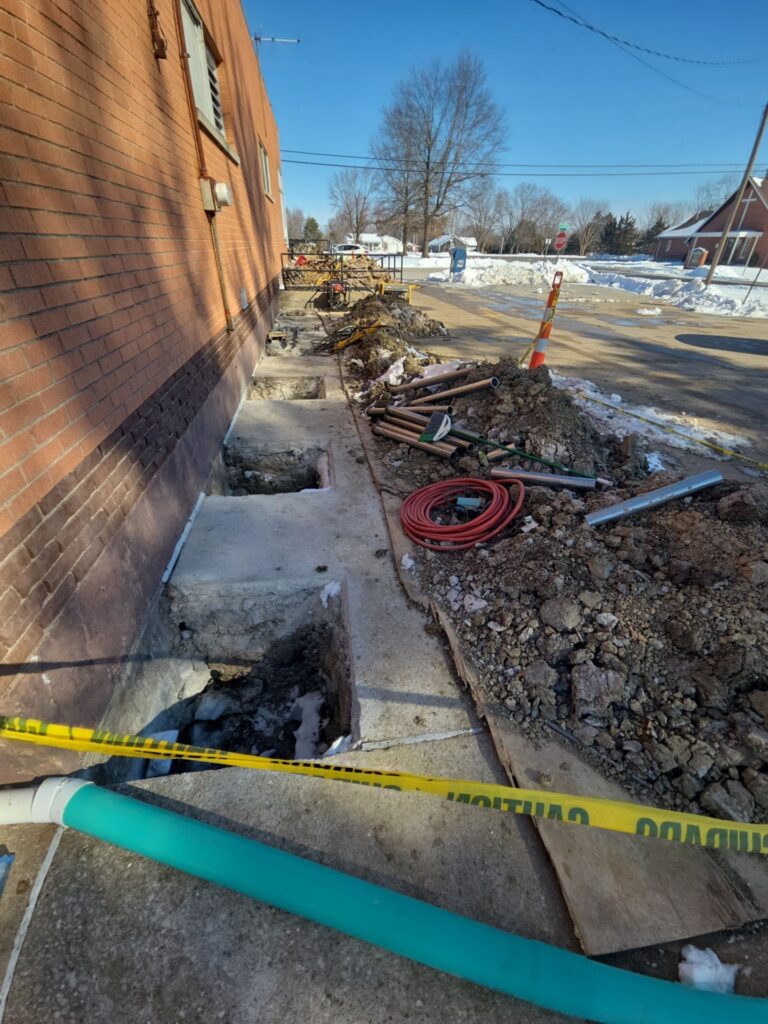
Once excavation began, our team uncovered additional structural issues that were not visible during our initial evaluation, including:
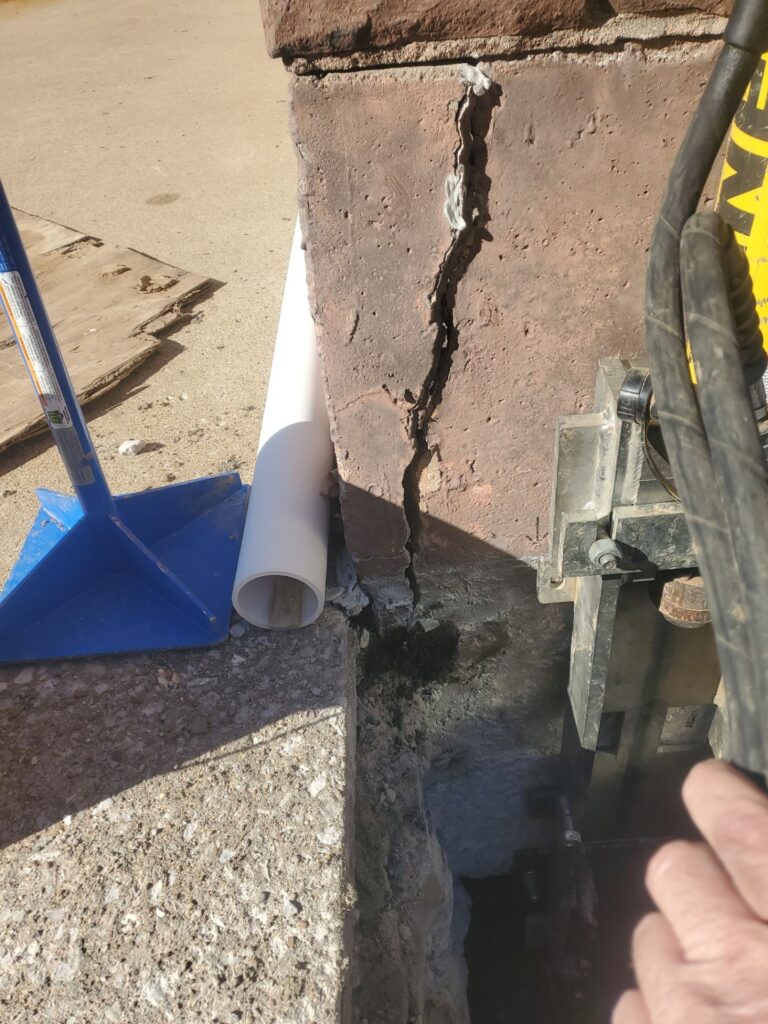
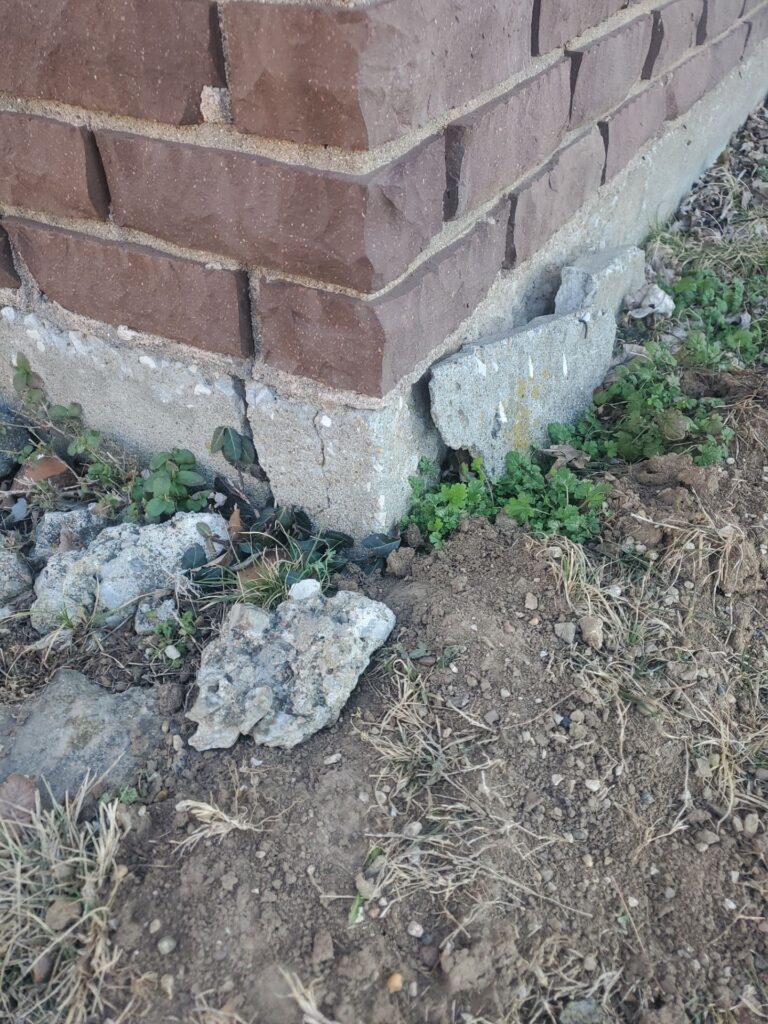
- Brick shear at several exterior corners caused by the concentrated weight of the brick veneer
- Corrosion of reinforcing steel, which resulted in spalled and loose concrete
Acculift reviewed these findings with the customer, recommended the necessary change orders, and obtained approval before proceeding with these repairs.
Navigating Project Challenges
Before repairs could be completed, several site-specific challenges had to be addressed.
Building Operations
Since the post office remained open, Acculift could not obstruct the main entrance. This required maintaining a dedicated, marked-off workspace, keeping equipment and tools out of the entrance and exit pathway, and ensuring customers did not attempt to access the workspace.
Accessibility Ramp
A concrete accessibility ramp obstructed part of the footing on the left side of the building. Since the construction of accessibility ramps can vary, Acculift was prepared to use a nitrogen breaker if the concrete had been poured monolithically. Fortunately, the ramp was backfilled with sub-base before pouring the sidewalk on top, so we just had to avoid the ramp’s perimeter walls, which was easy to do by adjusting the piering layout.
Having an engineer on staff enabled these modifications to be made quickly on-site rather than waiting for a third-party consultant to visit the site.
Underground Utilities
Polyjacking the bathroom floor required additional precautions because water and sewer lines were located beneath the floor slab. Drilling the injection ports could have damaged the underground pipes, and there was a risk of polyurethane entering them during the repair process. To avoid these issues, we had TSI Global, a professional utility locating company, mark the locations of the water and sewer lines on the floor.
Providing Solutions and Results
With the evaluation finalized and challenges addressed, Acculift completed the following repairs.
Push Piers
Based on the symptoms, the rear and left wall foundations were vertically stabilized with steel push piers manufactured by Earth Contact Products (ECP). This stopped the progression of damage to the CMU walls and brick veneer.
Carbon Fiber Wrap
Brick shear at exterior corners is a common problem and a simple fix. The solution was to break out the loose concrete, patch with new concrete mortar, and reinforce with a carbon fiber wrap. These repairs were also successful at re-establishing the proper bearing of the concrete foundation walls.
Polyjacking
To stabilize the sinking bathroom floor, Acculift used polyjacking with the goal of lifting it back toward its original position. The floor was successfully stabilized, but the lift was intentionally stopped before reaching a fully level position; the pipes were also beginning to lift, creating a risk of pipe damage.
Since the bathroom will be remodeled in the near future, we recommended they level the floor with self-leveling mortar beforehand.
Protect Your Property With Expert Foundation Repair
Foundation problems can look different from one property to the next. Cracks in walls, uneven floors, and structural movement all require a thorough evaluation to determine the underlying cause and the most effective repair solution. That’s why Acculift Foundation Repair develops customized repair plans based on each property’s unique conditions rather than taking a one-size-fits-all approach.
Whether you own a home or commercial building, our experienced team is committed to restoring stability while protecting your investment. If you’ve noticed signs of foundation damage, contact us today to schedule a free evaluation and learn which repair solution is right for your property.