
Have you ever walked across a room and thought something felt off? A floor that tilts beneath your feet is not just in your head. It is natural to be concerned, but when should that turn to worry? The answer depends on the amount of slope and whether other warning signs are present.
Below, we’ll cover everything you need to know, including who you can reach out to for help.
Signs of Sloping Floors
Sloping floors are not always obvious at first. In many cases, homeowners notice changes throughout the house before realizing the floor is no longer level. Your floor may be sloping if:
- Furniture feels uneven
- Doors and windows stick or don’t close fully
- Gaps between walls and floors get larger
- Cracks form in walls, ceilings, or baseboards
- Floor tiles or hardwood planks become uneven
- Balls roll across the floor without being pushed
What Is an Acceptable Floor Slope?
You can use a level to check your floor’s slope. Most building codes allow a slope of up to 1/4 inch over 6 feet. Anything more needs a professional evaluation.
How to Measure Floor Slopes
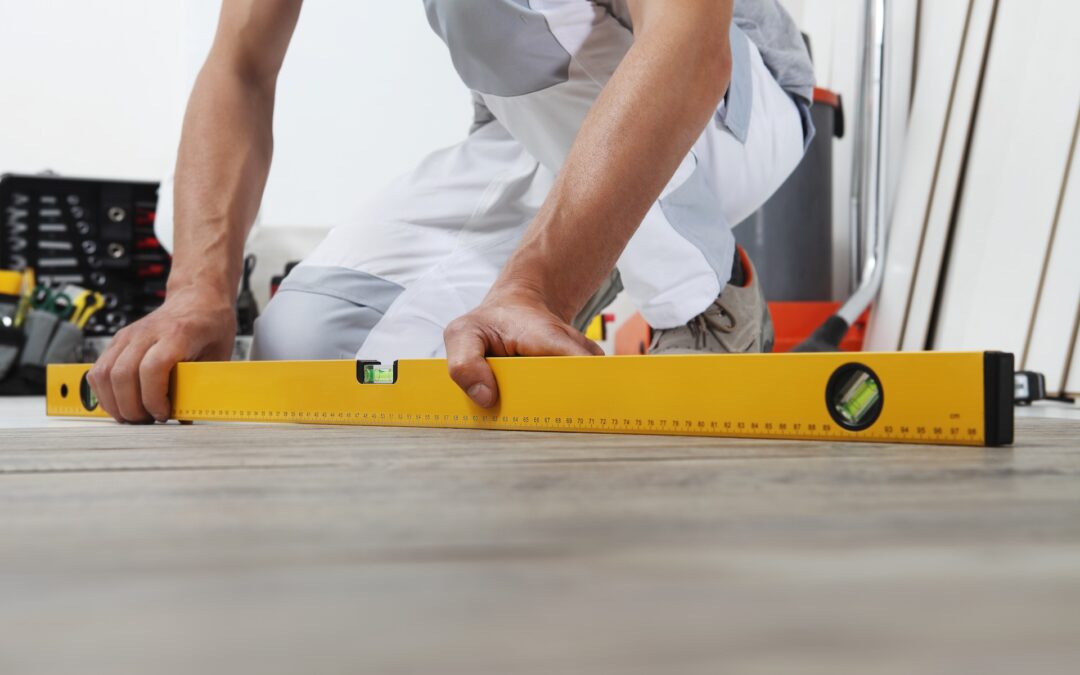
With simple tools, you can see the severity of the problem. To measure with a carpenter’s level:
- Place the level on the floor in several locations throughout the room.
- If the bubble stays centered, the floor is level in that area.
- If the bubble shifts to one side, use a tape measure to determine the height difference between the low and high points.
What Causes Sloping Floors
If your floor feels uneven, it likely points to problems with the foundation or the structure supporting your home.
A Settling Foundation
One of the most common causes is a foundation that has settled unevenly. Soil can compact and be washed away, especially during heavy rains or flooding. In the St. Louis region, clay soils can also dramatically change volume as they go from wet to dry conditions. This gradually creates gaps or low spots in the foundation, making floors tilt.
Structural Damage
Sloping floors can also result from damage to a home’s structural support system. Wood beams may weaken over time due to moisture, termites, or age-related deterioration. As these supports lose strength, they can begin to sag, causing the floor above to lean.
Improper Construction Techniques
Floors can slope because of construction issues. Building with substandard materials or taking shortcuts in framing during construction affects a home’s long-term stability. Improperly leveled floor joists or uneven concrete pours lead to gradual tilting.
Are Sloping Floors in Older Homes Normal?
Some unevenness in older homes is normal, especially those built decades ago. Over time, all houses experience some degree of settling as the heavy weight of a new structure compacts the soil beneath it. But large slopes, cracks, or soft spots are not normal and may signal damage that needs attention.
How To Fix Sloping Floors
A foundation repair specialist can identify the source of the problem and determine the appropriate solution.
Foundation Piering
If a settling foundation is the issue, foundation piers may be recommended. Helical piers and push piers are designed to vertically stabilize foundations by transferring the home’s structural loads to load-bearing soil or bedrock. This helps prevent further settlement and provides long-term structural support.
Support Column Piering
If the symptoms are present primarily in the center of the home, rather than on exterior walls that rest directly on the foundation, the issue may be with the center beam columns that support the joist system. These columns may have either settled over time or, more commonly in the St. Louis region, heaved during wet conditions. Installing a pier below the column support post can isolate the column from the soils that cause these issues, eliminating interior settling and heaving.
Wood Beam Repair
When wood beams deteriorate, replacement is necessary. Typically, it will be recommended to replace the entire affected wood beam with a structural steel beam and possibly new support posts.
Polyjacking
Polyjacking is commonly used to lift and level concrete slabs that have settled due to the washout of the subgrade below. During the process, polyurethane foam is injected beneath the slab, where it expands to fill empty spaces and provide support. This restores an even surface with minimal disruption to the property. Polyjacking is especially common in slab homes, garages, and walkout basements where the footing is possibly up to 30” below the floor slab level due to the frost line elevation.
Work With a Team You Can Trust
As a locally owned and operated company, Acculift Foundation Repair takes pride in serving homeowners throughout the St. Louis area with honest recommendations, quality workmanship, and reliable repair solutions. We combine advanced technology with decades of experience to deliver results that stand the test of time, all while providing the personalized service our customers deserve.
Don’t let problems linger any longer. See the difference our foundation repair professionals can make for you and your family by contacting us today!