
Foundation cracks are among the most common signs homeowners notice, especially in basements. Sometimes vertical cracks in walls form naturally as concrete cures, but other times, they can develop from shifting soil or water pressure. This guide covers everything you need to know about these vertical lines, from identifying whether they’re cosmetic or structural to understanding what causes them and how they can be fixed.
What Are Vertical Foundation Cracks?
Vertical foundation cracks run straight up and down or nearly so, within 30 degrees of vertical. They commonly form in the corners of doors and windows or in the middle of the wall, and they can appear in poured concrete or concrete block foundations. While they’re usually caused by shrinkage during the concrete curing process, their condition can tell a different story.
Are Vertical Foundation Cracks Serious?
Not all vertical foundation cracks are signs of serious structural problems. Here’s how to tell whether yours is a simple patch or a more expensive repair.
Cosmetic Cracks
Small hairline fissures, less than 1/16 inch wide, develop from natural concrete curing or minor thermal changes. While cosmetic cracks don’t affect the building’s integrity, they should be sealed to prevent moisture from entering and future deterioration.
Structural Cracks
A foundation crack that grows wider than ⅛ inch, leaks water, or continues to expand potentially indicates the foundation has moved or the soil is unstable. Over time, structural cracks can compromise waterproofing and weaken the wall’s load capacity. The presence of multiple vertical cracks in a concentrated area may also indicate a movement issue, even if the cracks are narrow.
What Causes Vertical Foundation Cracks?
Breaking down the causes of vertical cracks in the foundation makes it easier to understand what’s happening beneath the surface.
Concrete Shrinkage
Concrete naturally loses moisture and contracts slightly as it cures. If shrinkage happens unevenly or too quickly, concrete cracks to relieve built-up tension. These hairline cracks, less than 1/16 inches wide, are common in new homes or freshly poured basement walls. They are often cosmetic, not structural. However, if water seeps through or the cracks continue to widen, it’s best to consult a professional.
Differential Settlement
The ground beneath a foundation doesn’t always provide an even support system due to inconsistent soil profiles, poorly compacted fill, or washout caused by improper drainage. When one area settles more than another, differential settlement occurs, placing uneven stress on the concrete and forming tension lines that often appear as vertical cracks. This movement, more common in clay-rich soils, is worsened by extreme weather patterns that bring intense, heavy rains alternating with drought.
Cracks accompanied by uneven floors, sticking doors, or drywall separations likely indicate foundation settlement.
Lateral Movement
While diagonal cracks are most commonly associated with lateral movement, vertical cracks are also very common. When water accumulates in the soil surrounding a foundation, it exerts lateral pressure. The same type of pressure can be caused by expansive clay soil as the soil becomes wet and expands. Over time, these lateral pressures can push and flex basement walls inward, especially during heavy rains or in areas with poor drainage. The inward flex produces vertical cracks, especially near the mid-length of the wall.
Vertical cracks caused by hydrostatic pressure can increase in size if the water pressure is not alleviated and/or if the foundation wall is not strengthened to resist the lateral forces.
Freeze-Thaw Cycles
In colder climates, water in the soil freezes and expands, a process known as the freeze-thaw cycle. It can heave footings upward, creating vertical cracks in the foundation wall. This is especially common in the wet spring months and in poor drainage areas.
Construction Defects
Sometimes vertical cracks are linked to how the concrete was poured.
If the mix isn’t properly reinforced, vertical cracks can appear early on. Other contributing factors include improper curing conditions, an excessively high water-to-cement ratio in the mix design, and poor vibration during the pour, which leaves voids.
How to Fix Vertical Foundation Cracks
Risks of leaving cracks unsealed vary from moisture and air leakage to the growth of mold and mildew. The answer to fixing vertical foundation cracks lies in where the damage is coming from and its severity.
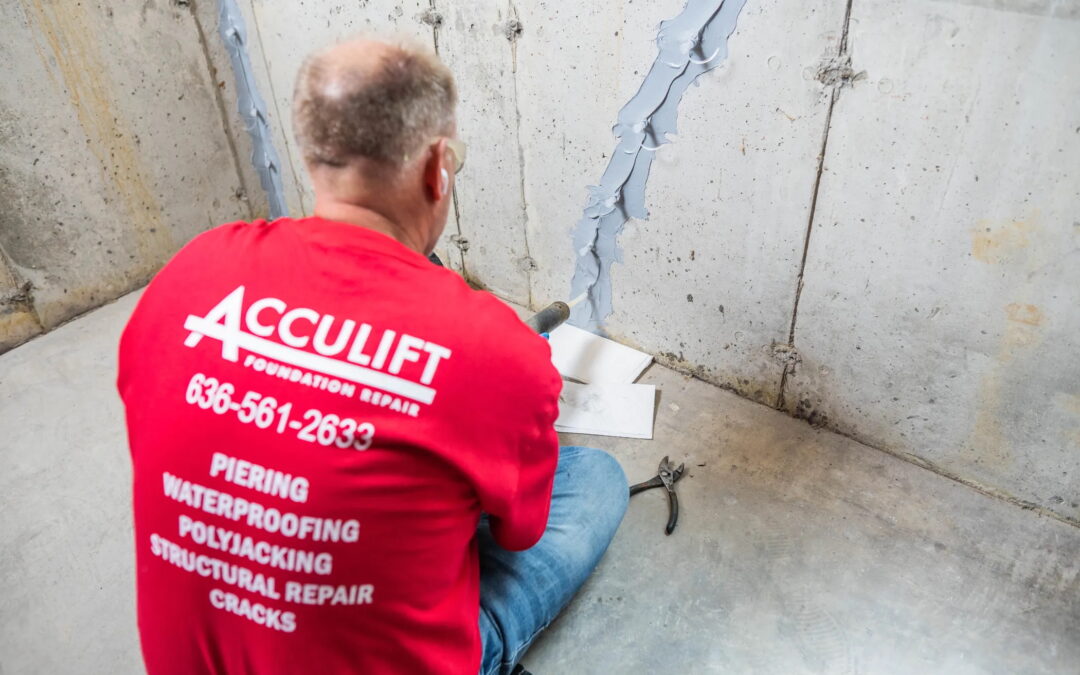
- Epoxy injection: is ideal for thinner cracks and available in varying viscosities.
- Polyurethane injection: is for wider cracks and easier to use on slightly damp cracks.
- Carbon fiber sheets: can be used on any size crack and are especially useful on cracks that require concrete patching.
- Interior drainage systems and sump pumps: are for homes with many cracks and/or susceptible to future movement.
- Structural strengthening: is for cracks caused by vertical or lateral movement, as stabilization should be considered first to avoid re-cracking.
Work with trusted experts who specialize in foundation repair to ensure the long-term stability of your home.
Move Forward With Confidence
If you’ve noticed a vertical crack and want clarity about the best next step, Acculift Foundation Repair is here to help. Since 1985, we’ve provided clear assessments and lasting repair solutions for homes across the greater St. Louis region. Contact us today to schedule a free inspection so you can move forward confidently knowing your home is protected.